THE DEVELOPMENT OF
DISPENSATIONALISM
FROM THE EARLY 1800'S TO
THE PRESENT DAY |
WHEN DID THE PRESENT
DISPENSATION BEGIN?
AND
WHEN DID THE CHURCH BEGIN?
Was it Acts 2? Acts 9? Acts 13?
Acts 28? or Acts 28 + + +?
The origin of the 'church' and the beginning of the present dispensation
don't necessarily have to occur at the same time.
(They are TWO SEPARATE QUESTIONS)
So, does a dispensational change
automatically require the birthday of a new church
and the termination of the previous church?
Was there more than one
'church' co-existing at any one time?
Of which 'church' are we members today?
|
by R.L.B.
The Recovery of
Dispensational Truth
What is Dispensational
Truth?
"God having spoken in
many parts and in many ways formerly to the fathers in the prophets, at the
end of these days has spoken to us in the person of the Son, whom he has
established heir of all things, by whom also he made the worlds." (Hebrews
11:1-2)
The word "dispensation" refers to what God, in His eternal wisdom, has
dispensed or administered to His chosen people at various
times and under various circumstances. For example He dispensed the
ordinance of circumcision to Abraham; He dispensed the law to his covenant
people Israel through Moses; and He dispensed true grace through His Son the
Lord Jesus Christ. During a former dispensation, or administration, His
covenant people
were forbidden to eat ceremonially "unclean" meats, but in a later administration such meats
were permitted (see Acts 10:9-15).
In this paper, we will be examining
some viewpoints various Bible teachers have pondered in their studies of the Word of
God as to when the present dispensation began, and, whether God created more
than one ekklesia, church, assembly, or gathering to participate
in those differing features of truth that He dispensed at various times during and
following the Acts.
The View that both 'The Church'
and the
Present Dispensation Began at Pentecost
Bible study from
a dispensational point of view was popularized by
the recovery of some features of bible truth in the 1800's by scholars like John
Nelson Darby (1800-1882), William Kelly (1820-1906), Charles. H. Mackintosh
(1820-1896), F. W. Grant (1834-1902), and more recently by Cyrus I. Scofield (1843-1921),
F. C. Jennings (1847-1948), Louis Sperry
Chafer (1871-1952) and several others. Most of these men placed the beginning of 'the church'
at the day
of Pentecost, (i.e., on the Old Testament "Feast of Weeks"), when God poured out His Spirit on the twelve apostles and on other
believers assembled that day (Acts 2:1-4).
J. N.
Darby, (1800 - 1882), was a prominent leader in the early Plymouth Brethren
movement. The 'Brethren' movement has exerted an enormous effect on the stances
held in many modern day religious organizations. Darby was a prolific writer, and made studious translations of
the Bible into English, French and German. His ministry took him on multiple trips from Great Britain to France, Germany, Canada, and the United States.
Darby is credited by many with initiating the recovery of the foundations of
the largely
ignored body of truth known as "dispensationalism." A recent
television broadcast on "The History Channel" puts this in prospective.
Judging by the so-called 'expert opinions' expressed on the program, the producers of the TV production
are decidedly unsympathetic to the biblical
concept of dispensational truth.
We, of course, totally disagree with the History Channel's conclusions that dispensational
truth is a
recent invention of man, that man being J. N. Darby. Many features of
biblical truth were lost very early in the history of the church, including the
truth of justification by faith, the character of the local and universal
church, and dispensational truth. These concepts, however, have been in the
Bible from the very beginning for all to accept. The fact that Huss, Luther and others
rediscovered many generally ignored biblical doctrines, such as the truth of justification by faith without works, does not
mean the doctrine of salvation by God-given faith alone was invented by those reformers. So with dispensational
truth. Although others before Darby may have begun to
understand portions of this system, Darby was certainly instrumental in
beginning the process of recovering it, systematizing it, and popularizing it.
The History Channel
program made the following observations:
Narrator: But this gripping
end-time scenario [of the rapture and the great tribulation] is not a
twenty-first century
evangelical invention. And perhaps more surprisingly, academics don't
believe it's a first century concept either.
Dr. Segal: It
comes from nineteenth
century, and early twentieth century protestant evangelical preaching
which connected together a number of separate scenes in the New Testament
and came up with what is essentially a new myth about the end of time.
Narrator:
This influential
form of biblical interpretation is called dispensationalism. It was
the brain child primarily of one man, John Nelson Darby, a nineteenth century British
evangelist.
Dr. Weber:
John Nelson Darby's teachings, were
called dispensationalism because he divided the Bible into various eras or
dispensations he called them. And he believed that God had worked with
humanity in different ways in each dispensation to bring them along in this
redemptive process.
Narrator:
Darby's innovation amounted to a
biblical super-system, a way to read Scripture that unified disparate texts
and in particular incorporated difficult apocalyptic books like Daniel and
Revelation which were often ignored in mainstream protestant churches. . . Dispensationalism caught on quickly in America.
Dr. Weber: And between
1880 and 1940 there were literally dozens of these bible institutes formed
all over the country. And almost without exception, dispensationalism was
the perspective taught in those Bible institutes, which put out hundreds and
thousands, over the years, of pastors and missionaries and Christian
educators. (The Antichrist, Part II, The History Channel)
(Above contributors were: Alan F. Segal, PhD., Professor of Religion,
Barnard College, and Timothy Weber, PhD., Author, On the Road to
Armageddon)
One of
Darby's valuable contributions to biblical understanding was
dispensational truth. Regarding
the differences between "prophecy" and the "privilege of the church,"
he
wrote:
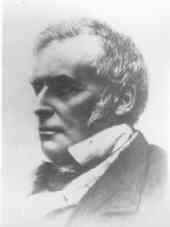
John Nelson Darby |
Prophecy applies itself properly to the earth; its object is not heaven.
It was about things that were to happen on the earth; and the not seeing this
has misled the church. We have thought that we ourselves had within us the
accomplishment of these earthly
blessings, whereas we are called to enjoy heavenly blessings. The
privilege of the church is to have its portion in the heavenly places; and
later blessings will be shed forth upon the earthly people. The church is
something altogether apart -- a kind of heavenly economy, during the rejection
of the earthly people, who are put aside on account of their sins, and driven
out among the nations, out of the midst of which nations God chooses a people
for the enjoyment of heavenly glory with Jesus Himself. The Lord, having
been rejected by the Jewish people, is become wholly a heavenly person.
This is the doctrine which we peculiarly find in the writings of the apostle
Paul. It is no longer the Messiah of the Jews, but a Christ exalted,
glorified; and it is for want of taking hold of this exhilarating truth,
that the church has become so weak. (The Hopes of the Church of God, In
Connection With the Destiny of the Jews and the Nations as Revealed in Prophecy,
The Collected Writings of J. N. Darby, Vol. 2, p. 376, [1840] )The calling of God for the earth is never
transferred to the nations; it remains with the Jews. If I want an
earthly religion, I ought to be a Jew. From the instant that the church
loses sight of its heavenly calling, it loses, humanly speaking, all. (Op cit, p. 378)
The body or membership of the body forms no
part of Peter's revelation. Nor does he speak of the Church or assembly at
all. Let us now turn to Paul. He is full upon this question.
He was a minister of the Church to fulfill or complete the word of God.
Hence the doctrine of the Church as the body of Christ is fully developed by
him. (The Church--The House and the Body, The Collected Writings of
J. N. Darby, Vol. 14, p. 97 [1867] )
As to the 'birthday' of the church, Darby identified this
day as Pentecost.
In the Ephesians, however, when the body is
fully spoken of, the apostle refers to the elect saints, who are created again
in Christ Jesus, and are sealed for the day of redemption; that is, united
to the Head, as God knows it; quickened, raised, and seated in heavenly
places in Christ the Head. That which has wrought this unity is the
baptism of the Holy Ghost, under which the elect and manifested remnant were
brought on the day of Pentecost. (The House of God; The Body of Christ; and
the Baptism of the Holy Ghost, The Collected Writings of J. N. Darby, Vol.
14, pp. 24-25, [1860] )
Even in the mid 1800's Darby recognized that God continued
to actively deal with the nation Israel until the point when they were "shut up"
at the great dispensational milestone of Acts 28:28.
If we trace the actual order of church
history in the Acts, we shall find the breaking up and scattering of the central
and only church of Jerusalem by the death of Stephen, gone to Jesus - and then the church on earth scattered;
thereon Saul called for, an entirely new instrument to Gentiles, rulers, and the
people of Israel; and thereon the union of the church with Jesus in
heaven for the first time mentioned, "Why persecutest thou me?" but
after this (though the principle of Paul's mission and the union of the church
with Jesus was established), the patience of God continuing to work by the
ministration of Peter . . . the calling of the Gentiles is by his mouth, that
the witness of the Jewish stock might still be preserved in grace . . . and
thereon extraordinary intervention might effect besides in one born out of due
time, the witness of prerogative grace in the disorder of the dispensation as to
man. We find the lingering traces of habitual evil in the saints, for they
objected to Peter his having gone to the Gentiles; yet this was the final
sin of the Jews. Such was the patience of God, that they were not,
historically, then shut up, till Paul's intercourse with them at Rome (Acts 28).
(Footnote to Notes on the Revelation, The Collected Writings of J. N.
Darby, Vol. 2, p. 176 [1839])
It is when the enmity [of man] has arrived
at its height, that He says, "Make the heart of this people fat" (Isaiah 6:10):
but it is not until nearly eight hundred years after (Acts 28:27), that we find
the accomplishment of this judgment pronounced so long before by the prophet.
It was when the people had rejected everything, that God hardened them, to make
them a monument of His ways. What patience on the part of God! (The Hopes of the Church of God, In
Connection With the Destiny of the Jews and the Nations as Revealed in Prophecy,
Lecture 9, The Collected Writings of J. N. Darby, Vol. 2, p. 362 [1840] )
Darby recognized that Acts 28:28 marked the temporary end of
God's offer of the millennial kingdom to Israel. He did not, however,
appear to have fully entered into the logical implications of that truth insofar
as it contrasts the characteristics of the church which existed before Acts
28:28 with those which characterized it after Acts 28:28.
Charles Henry Mackintosh,
(1820 - 1896), was a teacher in the so-called "Plymouth Brethren" movement along
with J. N. Darby. He was the beloved author of numerous books, such as his six volume set
of Notes on the Pentateuch and five volumes of Miscellaneous Writings.
In his earliest writings
C.H.M. said the
following regarding the essential characteristics of the church:
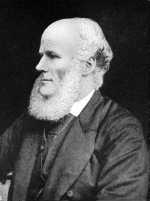
Charles H. Mackintosh |
In Matt. xvi., we have the very earliest allusion to the Church, and
there our Lord speaks of it as a future thing.
He says, "On this rock I will build My Church." He does not say, "I
have been, or I am building." In short the Church had no
existence until our Lord Christ was raised from the dead and glorified at the
right hand of God. Then, but not until then, the Holy Ghost was sent down
to baptise believers, whether Jews or Gentiles, into one body, and unite them to
the risen and glorified Head in heaven. This body has been on the earth
since the descent of the Holy Ghost; is here still, and shall be until Christ
comes to fetch it to Himself. It is a perfectly unique thing. It is
not to be found in Old Testament Scripture. Paul expressly tells us it was
not revealed in other ages; it was hid in God, and never made known until
it was committed to him. (See, carefully, Rom. xvi. 25, 26; Eph. iii.
3-11; Col. i. 24-27) . . . The termini of the Church's earthly
history are Pentecost (Acts ii.), and the rapture (1 Thess. iv. 16, 17). (
C. H. Mackintosh, Footnote in The Assembly of God, pp. 18 - 19)
Thus, C.H.M. originally believed
the church, the Body of Christ, began on the Jewish day of Pentecost. He
believed there were several prerequisites that
had to be met before "the church" could be formed.
-
It was still future at Matthew 16:18
-
It must begin after
Christ's resurrection
-
It must begin after His ascension and glorification
-
It would begin when the Holy Spirit was sent down to
baptize believers.
But aside from stating when "the Church" began,
C.H.M went on to identify what he believed was the true earthly character of the church
that existed from Pentecost to the close of the Lord's ministry to the earthly
Nation Israel at Acts 28:28. He also seemed to be at the very edge of
discovery of the truth of the remarkable manifesting of the Body of Christ's never-before-revealed heavenly character by Paul in his prison epistles
written after national
Israel was temporarily set aside:
The doctrine of the Church's heavenly character was
developed in all its power and beauty by the Holy Ghost in the Apostle Paul.
Up to his time and even during the early stages of his ministry, the
divine purpose was to deal with Israel. The thought
of a church composed of Jew and Gentile, 'seated together in the heavenlies',
lay far beyond the range of prophetic testimony. The Kingdom
was still the very highest thought. The Church as seen in the opening of
the Acts ... was still the Kingdom, and not the great mystery of the Church.
Those who think that the opening chapters of Acts present the Church in its
essential aspect, have by no means reached the divine thought on the subject."
(C. H. Mackintosh, Elijah the Tishbite, Concluding Remarks, Miscellaneous Writings, Volume 5,
Loizeaux, pp. 127-130).
When Christ was raised from the dead, all the members
of His body were raised also; when He ascended into heaven, they ascended
also; when He sat down, they sat down also; that is, in the counsel of God,
and to be actualized in process of time by the Holy Ghost sent down from
heaven. Such was the thought and purpose of the divine mind concerning
them. Believers did not know this at the first; it was not unfolded by
the ministry of the twelve, as seen in the Acts of the Apostles, because the
testimony to Israel was still going on; and so long as earth was the
manifested scene of divine operation, and so long as there was any ground of
hope in connection with Israel, the heavenly mystery was held back; but when
earth had been abandoned and Israel set aside, the apostle of the Gentiles,
from his prison at Rome, writes to the Church, and opens out all the
glorious privileges connected with its place in the heavens with Christ.
(Op cite, p. 144)
As to Acts 28:28, C.H.M clearly understood the significance
of Paul's quotation of the Holy Spirit's words to Israel from Isaiah 6:9-10,
that this was God's final closing judgment on Israel.
There was now no more hope. Every effort that
love could make had been made, but to no purpose; and our apostle, with a
reluctant heart, shuts them up under the power of that judicial blindness
which was the natural result of their rejection of the salvation of God.
...now all was over...he must therefore set himself to bring out that holy
and heavenly mystery which had been hid in God from ages and
generations---the mystery of the Church as the body of Christ united to its
living Head by the Holy Ghost. Thus closes the Acts of the Apostles,
which like the Gospels, is more or less connected with the testimony to
Israel. So long as Israel could be regarded as the object of
testimony, so long the testimony continued; but when they were shut up to
judicial blindness, they ceased to come within the range of testimony,
wherefore the testimony ceased. (Op cite, pp. 141-142).:
We could prolong the very interesting quotes which indicate
that even before his death in 1896, C.H.M. had begun to appreciate many features of
truth which would eventually be researched and developed by others, only to be
misunderstood, rejected, and abandoned by a majority of present-day Bible teachers.
We have only to glance at the history of the Church for
the last eighteen centuries to see how feebly [the mystery revealed through
Paul the prisoner] was held and how speedily it was let go. I am
deeply conscious of how feebly and incoherently I have developed what I have
in my mind concerning the doctrine of the Church, but I have no doubt of its
real importance and feel assured that as the time draws near, much light
will be communicated to believers about it. At present, it is to be
feared, few really enter into it. (Op cite, pp. 146-150)
For a very interesting article by C.H.M.
please read on our website "The Life and Times of Elijah the Tishbite,
Concluding Remarks" to see the remarkable progress this devout brother made in
dispensational truth before his death in 1896.
Cyrus Ingerson Scofield (1843 - 1921), was a congregational minister,
who is probably best remembered for his 1909 dispensational and premillennial
Scofield Reference Bible. He was also author of a dispensational Bible
course, and of other writings. Many of his dispensational conclusions were
similar to those of J. N. Darby. In fact, the system he taught is
sometimes referred to as the "Darby - Scofield" position. We present
here a very small sampling of his writings, having to do with the subject of the
present dispensation and the birthday of "the church."
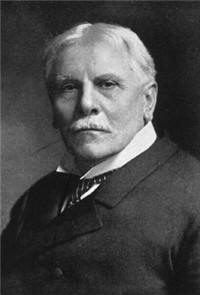
C. I. Scofield |
Further,
Scripture shows the student that neither Israel nor the church always existed;
each had a recorded beginning. The beginning of Israel he finds in the call of
Abram. Looking then for the birth of the church he finds (contrary, perhaps, to
his expectations, for he has probably been taught that Adam and the patriarchs
are in the church) that it certainly did not exist before, nor during, the earth
life of Christ, for he finds Him speaking of His church as yet future when He
says (Matt. 16:18), "Upon this rock I will build my church." Not, have built,
nor am building, but will build.
He finds, too, from Ephesians 3:5-10, that the church is not once mentioned in
Old Testament prophecy, but was, in those ages, a mystery "hid in God."
Scripturally, he finds the birth of the church in Acts 2, and the termination of
its career on the earth in I Thessalonians 4. (C. I. Scofield, Rightly
Dividing the Word of Truth, Chapter 1, The Jew, the Gentile, and the Church
of God).
In the above
quotation, Scofield cites Ephesians 3:5-10 as the basis of his position, that what he terms "the church"
was never mentioned in the Old Testament, and had its birth in Acts 2, (on the
day of Pentecost). Scofield appears to treat this
"church" as a static organization and applies "the mystery" of
Ephesians 3 to that "church" throughout it's historical manifestation, from it's
inception at Pentecost to the present time. However, he does appear to
depart somewhat from Darby's position by stating that the "sixth dispensation", began
not at Pentecost, but at the cross:
Man under grace. The sacrificial death of the Lord Jesus Christ introduced
the dispensation of pure grace, which means undeserved favor, or God giving
righteousness, instead of God requiring righteousness, as under law. Salvation,
perfect and eternal, is now freely offered to Jew and Gentile upon the
acknowledgment of sin, or repentance, with faith in Christ. (C. I. Scofield,
Rightly Dividing the Word of Truth, Chapter 2, The Seven Dispensations).
Lewis Sperry
Chafer, (1871-1952), who authored his eight volume Systematic Theology, held a
very
similar position to that of Darby and Scofield as to when the church began.
Like them he also
believed "the Church" was the "mystery" cited by Paul in Ephesians 3:3-6.
But as to the significance of Acts 28:28 Chafer, unlike C. H. Mackintosh, deemphasized or
simply ignored it:
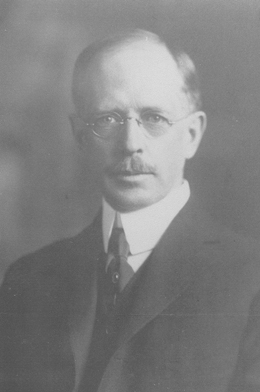
Lewis Sperry Chafer |
The word church is not found in the Old Testament because of
the fact that the Church did not then exist, and being
a mystery or sacred secret of the New Testament (Eph. 3:3-6), it is not even a
subject of Old Testament prophecy. [It is used but] once in a prophecy by
Christ of the true Church which was yet to be formed (Matt. 16:18). The
true Church could not have existed until Christ died; for she must be redeemed
by His blood (Eph. 5:25-27). The true Church could not have existed until
His resurrection; for she partakes of His resurrection life, and she is the
harvest of which He, in resurrection, is the "Firstfruits" in the New Creation.
The true Church could not have existed until His ascension; for He must first
become "head over all things to the church." Likewise, the true Church
could not exist until the advent of the Spirit on the day of Pentecost; for she
can be formed only by the present ministry of the Spirit in baptizing all
members into one body and causing them to drink into one Spirit (1 Cor. 12:14).
Therefore we turn to the Epistles [of Paul] for the unfolding of the doctrine of the
Church. This revelation was given to the Apostle Paul (Eph. 3:3-6), as
before stated, and is set forth by him particularly in the Ephesian and
Colossian letters. (Lewis Sperry Chafer, Major Bible Themes, The Church: Her Membership,
p. 205-206.)
Mid-Acts Dispensational Positions
Most
of the forgoing Bible teachers
believed that God's company of believers (the ekklesia or
'church') began on the day of Pentecost, which is the Old Testament "Feast of
Weeks" and that this particular 'church' is the same church hope which is in
existence today. In addition, it appears that many, except for
C. H. Mackintosh, believed that the present dispensation also began
at the day of Pentecost and continues today. (Scofield indicated that the
present dispensation began at the cross, and Mackintosh seems tantalizingly
close to an Acts 28:28 position).
But, dispensational Bible
knowledge, initially recovered and systematized by John Nelson Darby, became
relatively stagnated, both within the so-called Brethren movement and to the
non-reformed branches of the evangelical community throughout the world. There were other Bible researchers
who took up the challenge begun by C. H. Mackintosh. These
teachers, like C.H.M.,
concluded that advances could and should be made in this branch of study which could shed
light on some problems they felt were inherent in the Darby/Scofield
dispensational format.
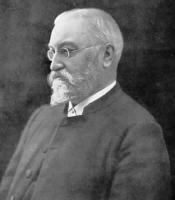
Ethelbert W. Bullinger |
In the late 1800s
a Vicar of the Church of England, Dr.
Ethelbert W. Bullinger, (1837 - 1913), along with J. N. Darby, C. H. Mackintosh, and others, came to realize the distinctive roll
the apostle Paul played in revealing to God's people what Bullinger termed 'church truth,' as opposed
to 'kingdom truth.' Bullinger was editor of "Things to Come"
magazine, secretary of the Trinitarian Bible Society, and prolific author of many scholarly and helpful works including A
Critical Lexicon and Concordance to the English and Greek New Testament
(1877), and his ground-breaking and exhaustive work on Figures of Speech Used
in the Bible (1898). His most outstanding achievement, however,
was The Companion Bible, of which he was primary editor. Bullinger
attempted to take a fresh look at the Scriptures, believing that to many, Bible
doctrines had become like dusty creeds which are repeated without really understanding
the basis of their truth.
Augustine, Luther, Calvin, Darby, and Newton would be
surprised to-day to find that those who question what they believed are treated
as guilty of presumption, and of a sin to be visited with excommunication!
These good men little thought that the inferences which they drew from the Bible
would be raised to a position of almost equality with the Bible itself.
(E. W. Bullinger, How to Enjoy the Bible, Introduction, p.xv, 1907)
Bullinger attempted
(at least in his own mind) to be as consistent as possible in applying dispensational
concepts to the various topics of Bible study, such as the second coming of
Christ, law & grace, kingdom & church, etc. Bullinger's
dispensational positions varied widely as he struggled to consistently interpret
Scripture.
For example, in his relatively early book The Church Epistles he does not at all discuss
the time of the inception of "the church." Indeed, he lumps
together Paul's letters to the seven churches, thus indicating his belief that
"the church" must have begun sometime before Paul wrote his epistles to
those churches. But, he goes a step further. In a discussion of
Hebrews 13:13 regarding "the camp" Bullinger said the following, cryptically
implying (if I read him correctly) that "the church" may have begun at
Pentecost:
Paul, in the epistle to the church of God at Corinth, shews
also that the church up to that time was the antitype of the Camp in the
wilderness. [see 1 Cor. 10:1-2, 6, & 11 - Ed]. So Scripture teaches us in
the plainest language possible that the Camp spoken of in Heb. xiii. 13 is not
Israel as a nation, but the company of believers in the apostles' day, as seen
in the "Acts of the Apostles," in association with Jerusalem and endued with
visible power from on high. . . . The deliverance of Peter, first from the
high priest, and afterwards from Herod, with the death of Herod, and the
deliverance of Paul at Philippi, shew that the believers were one Camp, whether
at Jerusalem or among the Gentiles, wherever any were gathered to the name of
the Lord Jesus, so long as the patience of God lingered over Jerusalem and the
things that pertained to the kingdom of God were the subject of the apostles'
preaching. While this continued the Gentiles were brought into the Camp by
the ceremonial purification, the washing of the flesh in water, when God had
purified their hearts through faith (Acts x. 47 and xv. 9). (E. W.
Bullinger, The Church Epistles, p. 180-181)
In a later writing, however, Bullinger stated that the
present dispensation began with the apostle Paul during his early ministry.
This Dispensation . . . commenced outwardly
by the ministry of Paul, in the Dispensation or administration committed
formally to him. (E. W. Bullinger, How to Enjoy the Bible, p. 95)
Bullinger regarded the Lord's declaration in Matthew 16:15-19
to be future to the present day: regarding
this future ekklesia which He would build, Bullinger said the
following:
On Him, the Messiah, His Ecclesia or
Assembly, spoken of in the Prophets, would yet be built. "I will build"
are His words. "I will call" are Jehovah's words in Hosea: "I will call
them my people, which were not my people; and her beloved, which was not
beloved. And it shall come to pass, that in the place where it was said
unto them, Ye are not my people: there shall they be called the children of the
living God. Isaiah also crieth CONCERNING ISRAEL, though the number of the
children of Israel be as the sand of the sea, A REMNANT SHALL BE SAVED" (Rom.
ix. 25-27).
This Remnant is the Ecclesia mentioned by
the Lord in Matt. xvi. 18.
The gates of hell will strive against it, as
Rom. ix. 29 testifies, but the remnant shall be saved. This future
Ecclesia of Israel is to be built UPON Christ, the Messiah, as the Foundation
Stone.
The Church of God is now a spiritual
building IN Christ: but the Ecclesia of Matt. xvi. 18 is the future, corporate,
saved "remnant" of Israel.
The special usage of this word Ecclesia,
in this Present Dispensation, by the Holy Spirit was not known until it was
revealed to Paul as the Secret (or Mystery) which had been "hid in God" (Eph.
iii. 9); "hid from ages and from generations" (Col. i. 26); "kept secret since
the world began" (Rom. xvi. 25). (Op cit, p. 147-149)
Bullinger considered the book of Acts as 'transitional' in
nature. For example, he
wrote:
Up to Acts xxviii, Peter's offer of the
kingdom (Acts iii, 19-21, R.V.) was still open.
Not until Acts xxviii, 25, 26 was Paul
commissioned to pronounce this threatened judicial blindness, for the third, and
last time.
It is obvious that not until after Acts
xxviii, could any declaration of the Mystery have been made. Until then
nothing could be said which would be incompatible with the possible acceptance
of Peter's offer. (Op cit, p. 178-179)
But although he recognized Acts 28 as an important
dispensational marker, he (in 1907) seemed not to understand the full implications of
that marker. For example, his book How to Enjoy the Bible avoids discussing the birthday of the present day church.
So while Bullinger, at this time, appears to have taken a 'mid-Acts' position with
regard to the beginning of the present dispensation, it is not entirely clear whether
he also took a 'mid-Acts' position as to the birthday of the church.
Later in his ministry, as we shall see, Bullinger emphatically denied that "the
church" began at Pentecost.
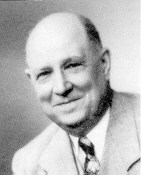
John C. O'Hair |
John C. O'Hair, (1876 - 1958),
followed in the dispensational footsteps of Dr. Bullinger's early ministry and became a prominent
dispensational Bible teacher in the United States. He was the author of
numerous booklets describing the distinctiveness of the present dispensation.
J. C. O'Hair was one of several important leaders who helped launch the current "Grace Movement."
This movement evolved into a 'loosely bound'
denomination known as "The Grace Gospel Fellowship" or "GGF,"
officially organized in 1944.
Various members of the GGF are known to hold at least two
distinct positions regarding the beginning of the present dispensation and the historical beginning of the church,
namely that the church was born either at Acts 9 with the conversion of the apostle
Paul, or that it began at Acts 13 with the commendation of Barnabas and Saul for
the ministry of the word by the Holy Spirit and by the brethren at the church in Antioch.
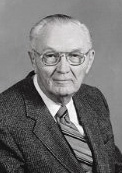
Cornelius R. Stam
|
Cornelius R. Stam, (1908 - 2003),
(brother of John Stam, martyred missionary to China) was the former editor of The Berean Searchlight, and late president
of the Berean Bible Society. Although he was an early member of the GGF,
certain side issues prompted him to form a rival organization in 1967 known as
the Berean Bible Fellowship. Stam specifically placed the birthday of the church at the conversion
of Saul of Tarsus in Acts 9. He believed Saul of Tarsus was the first
member of the body of Christ. Stam says the following in his commentary on
the Acts:
THE PENTECOSTAL CHURCH -- In
this passage [Acts 2:42-47] we find the first mention of "the church" in
Acts. This fact has been used to support the traditional view that the
church of this age (the Body of Christ) had its
historical beginning at Pentecost -- that Pentecost was "the
birthday of the Church." This is one of the great blunders
which has caused such confusion and division among God's people today.
(Cornelius R. Stam, Acts--Dispensationally Considered,
Vol. 1, p. 116)
Expressing his view that the birthday of the church and the
beginning of the present dispensation were simultaneous occurrences, Stam goes on to say:
[Paul's] conversion marked the beginning
of the new dispensation . . . of grace. (Op cit Vol. 2, p. 17) [The
reader is encouraged to refer to Stam's
five specific proofs of his position, pp. 176-180.]
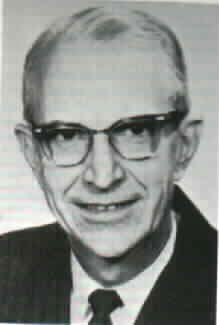
Charles F. Baker |
Charles F. Baker,
(1905 - 1994),
was an important organizer of the Grace Gospel Fellowship (GGF). A graduate of Dallas
Theological Seminary, he edited the
Biblegram and also Truth magazine
beginning with the magazine's inception in 1950. He
also founded the Milwaukee Bible
Institute (now Grace Bible
College of Grand Rapids, MI) in 1939, serving as its president for
29 years. He is the author of numerous books dealing
with dispensational themes. He, along with a majority
of GGF members, believed that both the church and the present
dispensation began, not at Acts 9 at the conversion of Saul, but
with the commencement of Paul's ministry (as commended by the church at Antioch) in Acts 13.
To promote unity
between the two camps within the GGF, (i.e., between those who hold an Acts 9
position and those who hold an Acts 13 position), the "Grace Gospel Fellowship," adopted the
following less specific doctrinal statement:
In the present dispensation there is only one true Church, which is called the Body
of Christ (1 Cor. 12:13; Eph. 1:22, 23; 3:6). The historical manifestation of
the Body of Christ began with the Apostle Paul before he wrote his first epistle
(1 Thess. 2:14-16 cf. Acts 13:45, 46; Phil. 1:5, 6 cf. Acts 16; 1 Cor. 12:13, 27
cf. Acts 18) - (Doctrinal statement of the Grace Gospel Fellowship)
One of the
implications of the view that a 'new church' was born at Acts 9, or Acts 13, is
that 'two bodies,' or 'two distinct churches,' (a Pentecostal Kingdom Church,
and the church known as 'Christ's body'), must have coexisted
side-by-side after the 'new church' began. This view has been held by many
dispensational teachers, including a dear brother this writer was once
privileged to know, the late Ike T. Sidebottom (1897 - 1970), former editor of The Timely
Messenger, and pastor of "The Church at 615 College Avenue" in Fort Worth,
Texas, from 1929 to 1965. More recently Dr. W. Edward Bedore,
former Executive
Director of the Berean Bible Institute, an arm of the Berean Bible Society,
expressed this view in an article in The Berean Searchlight, a 'mid-Acts' publication.
The foregoing list of things that took place
following Paul's conversion provides compelling evidence that there was a major
departure from the prophecy program at that time. God dispensed grace
instead of wrath. This unprophesied dispensing of grace initiated a new
Church, the Body of Christ, which over the next several years would grow even as
the existing Kingdom Church would wither and finally die out. - (W. Edward
Bedore, The Practical Beginning of the Body of Christ, The Berean Searchlight,
February 2006, p. 20)
Dr. Bedore
believes, along with many mid-Acts teachers, and with many Acts 28
dispensationalists, that the Scriptures teach a new ekklesia (church, assembly,
or gathering) was born at the precise historical time that the present
dispensation was manifested, whether that time was Acts 9, Acts 13 or after Acts
28:28. In the case of the mid-Acts systems, this requires the problematic
theory that 'two
bodies' simultaneously existed during the Acts, as implied by Dr. Bedore (above). As just one example of the
difficulties created by this approach, the Acts 9 system holds, for example,
that when Saul of Tarsus initially believed the gospel, he became the first member of the ekklesia
known as the "Body of Christ," yet he was baptized with water, an ordinance
believed by many mid-Acts dispensationalists to be a 'kingdom ceremony.'
Moreover, Ananias, who baptized Saul, was undoubtedly part of the Acts 2
('kingdom') church.
Thus we have someone in the 'old' church baptizing someone into an entirely
different, 'new,' church, with a water ceremony which mid-Acts
dispensationalists teach has no part in the present dispensation. (Even
though Paul practiced water baptism throughout his pre-Acts 28:28 ministry).
One problem is that
some
dispensationalists simply take for granted that the historical beginning
of the present "church" must necessarily coincide with the establishment of the
present dispensation, whether that timeframe is Acts 9, Acts 13, after Acts
28:28, or during a second imprisonment of Paul. Many assume a new
church would necessarily have to be born, or "initiated,"
whenever God, in His
sovereign wisdom, introduces a new administration, or dispensation. For example, when
Israel's opposition to their Messiah became irrevocable, God initiated the
present (new) dispensation, and, the popular theory says, this new dispensation
could not be compatible with the church already in existence, so God must have created a
'new and distinct church' that would be consistent with His new dispensation.
More on this theory later.
The Acts 28:28 Position
In England, in the early
1900s, after discussions with a young man, Charles H. Welch , the
aforementioned Dr. E. W. Bullinger, became convinced that his previously held 'mid-Acts'
position was inconsistent with the kingdom miracles and signs that took place in
the Acts and in earlier Pauline epistles, and with their complete absence in the 'prison
epistles.' Although the majority of Bullinger's earlier writings appear to reflect
a 'mid-Acts' position, his final writings adopt a firm Acts 28:28 position which held
that both the birthday of the present day church, the body of Christ, and the beginning of the
present dispensation, took place following the
significant dispensational boundary line at Acts 28:28.
Before we take up the Prison Epistles,
written after Acts xxviii, 29, 30, it is absolutely necessary that we should have
a very clear understanding of the great dividing line which separates the
earlier from the later Pauline Epistles.
In order to gain this understanding we must
have a clear view of the scope and design of the Acts of the Apostles as being a
Dispensation characterised by CONCLUDING ISRAEL'S BIBLICAL HISTORY.
Of no book of Scripture has the key been more effectually lost,
or more difficult to recover. The eyes of Christendom have been blinded by the
tradition, originated by the Popes of Rome, that "Jesus Christ came on earth to
found a church, and that He gave the keys to Peter, and Peter gave them to the
Pope." This, or the milder and more modern form of expression, "The Church
began at Pentecost," is the root of all the darkness, which, like a thick veil,
hides the truth from the churches to this very day.
Through the unfortunate translation of
ekklesia by "church" in Matt. xvi. 18, instead of "assembly" or
"congregation" (as in the Old Testament), the Romish and Protestant figments
have brought forth the pernicious fruit that, in the Acts of the Apostles, we
have the formation of "the Christian Church." - (E. W. Bullinger,
The Foundations of Dispensational Truth, p. 182)
Charles H.
Welch, (1880 - 1967), began his ministry as editor of The Berean Expositor,
which commenced publication in 1909. He also
organized 'The Berean Forward Movement.' The author of the paper you are
now reading met Mr.
Welch during his visit to the United States in 1955. Mr. Welch has consistently held to
an Acts 28:28 dispensational position. Regarding Pentecost he said:
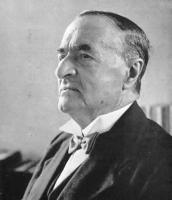
Charles H. Welch |
It is practically a "fundamental" that "The
church began at Pentecost." This consensus of opinion has wrought havoc
among the people of God. It has been the foundation of much of the "gifts"
and "tongues" movements, "faith healing," and the many sects and splits that go
to form Christendom. We unhesitatingly challenge this hoary tradition, and
seek to show by the Word itself that Pentecost has nothing whatever to do with
the "church," but like "Matthew," and the earthly ministry of the Lord Jesus, is
a continuation of the gospel of the kingdom, related to Abrahamic and Davidic
promises, hopes, and people. (Charles H. Welch, Dispensational Truth: or the
Place of Israel and the Church in the Purpose of the Ages, p. 137)
When does a dispensation begin? The
question is important because of its bearing upon the claims of Acts
twenty-eight, or of Acts thirteen, to be the beginning of the dispensation of
the Mystery, and of the Church which is the One Body. . . . Paul received
the dispensation of the grace of God by revelation when he became the Prisoner
of Jesus Christ for us Gentiles (Eph. 3:1-13). Did this take place at Acts
thirteen? There can be but one answer to these questions. They did
not take place until the events recorded in Acts twenty-eight became history.
A dispensation is a "stewardship." A stewardship implies a steward who
receives a commission, and a dispensation "begins" when that steward receives
the command "Go . . . tell this people" (Isa. 6:9), even as Paul waited until
words of the Lord were recorded, "unto whom now I Send
thee" (Acts 26:17). (Charles H. Welch, Acts Thirteen or Acts
Twenty-eight? or When did the present dispensation of the Mystery begin?, p.
1, 1957)
Others who held
dispensational positions similar to those of Mr. Welch included Otis Q. Sellers
(1901 - 1992), founder of The Word of Truth Ministry in 1936, and the late Oscar M. Baker, (1898 - 1987), editor of Truth For Today which began
publishing in
1948. After Mr. Welch's death the ministry of the Berean Forward Movement continued
under the leadership of Mr. Stuart Allen.
Post Acts 28:28 Positions
Gordon K.
Edgar claimed that the complete revelation of the truth of the present
dispensation did not take place until well after Acts 28:28, and,
consequently, that
even the prison epistles are "transitional" in nature. Commenting
on Acts 28:28 Edgar states:
It may be asked whether the quotation of
Isaiah 6:9, 10 in the latter portion of Acts 28, had any real significance at
all. The answer is, yes it did, but the importance of its appearance
during the events at Rome must be neither minimized nor overemphasized.
(Gordon K. Edgar, Dispensationalism and Acts 28:28, Sept. 10, 1953, p.
26)
There can be no doubt that this was an
important step away from the program of God to Israel. It is as it
were a climactic event in the history of the Acts, yet it was several years
later before we have tangible evidence that God was absolutely through with
Israel as a nation. That evidence is presented historically in the
destruction of both the Temple and the city of Jerusalem by Titus in 69-70 A.D.
(Op cit, p. 27)
Finally, we must take note of when the
present economy of grace actually did begin if, as claimed in this study, it did
not begin at any time during the book of Acts. The answer is, that in
conformity with the unique character of this administration, it had its
beginning secretly and mystically, with no recorded action to mark the
historicity of the event. The transitional nature of many of Paul's final
epistles gives adequate evidence as to the evolutionary nature of the
administrational change. Because of this, we must be especially alert to
"test the things that differ" in those epistles of Paul written after the
close of the book of Acts. For some of these writings are transitional in
nature and contain much material related to the systematic closing out of the
kingdom program of the Acts era, as well as the unfolding and expansion of
truths connected with this present administration. (Op cit, p. 28)
While there is
overwhelming Biblical evidence to support the fact that "A
church," (i.e., the future kingdom ekklesia that Christ promised
to build (Mat. 16:18-19), began at Pentecost, the complete absence in Scripture
of comparable evidence for the later birth or initiation of another ekklesia
seems to have
led Mr. Edgar and others to propose what they felt was a plausible solution to
the problem: "that in conformity with the unique character of this
administration, it had its beginning secretly and mystically, with no recorded
action to mark the historicity of the event." This strange theory,
void as it is of scriptural support,
is also known as reading the "wisdom of man" into the text of the inerrant Word of
God. Or, as another put it, "Reading the Word of God with pre-focused
glasses."
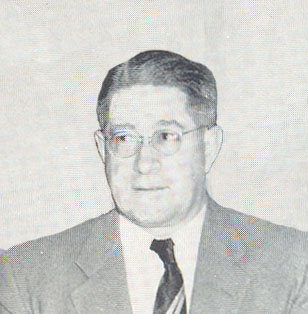
Mervin A. Tillinghast |
Mervin A. Tillinghast, (1909 - 1998), and the
author of this paper were involved together in several gospel ministries.
We regularly gave gospel messages to inmates at a county jail, we gave out
gospel tracts together, and we visited numerous people in need of physical help
and of eternal
salvation. "Merv" and I also engaged together in numerous in-depth discussions
regarding various features of truth found in the Scriptures. We also
published a limited circulation monthly Bible study known as "The Steward." As to whether the birthday of the body of Christ and
the beginning of the present dispensation occurred at the same historical time,
this brother came to believe in his later years that "the body of the Lord Jesus
Christ could not begin" until the truth of that one body was revealed.
Furthermore, he eventually came to believe that this truth is not revealed to every believer,
but
only to a chosen few. He believed that while they may be "saved," they are
not necessarily part of the body of
Christ, but could be part of God's former kingdom program.
I have been interested in looking at the
Truth as it pertains to the Church, the Body of Christ. I started out by
using Eph 3:9, 10, 11 as my base "The purpose of the ages are purposed in Christ
Jesus." Therefore all truth centers in the Lord Jesus Christ. Since
all growth of the Body comes from the head Eph. 4:15, 16 and Col. 2:19 therefore
there can be no Body of Christ until there has been the revelation of the Head.
. . . The Church is only made known to those who are chosen Eph. 1:3-5.
- (Merv Tillinghast, letter dated Aug 22, 1996)
Brother Tillinghast believed, along with Gordon K. Edgar, that Ephesians and other prison
epistles written during Paul's first imprisonment contained a number of
elements of 'kingdom truth.' In my opinion this theory puts Ephesians and
other prison epistles outside the 'zip-code' mail zone specifically addressed to
believers in the present dispensation. We believe such a position leaves little or no
Scriptures upon which to base God's message for believers following the final default
of the nation Israel at Acts 28:28.
Supportive arguments for and against the various positions
Thus far we have
cited four views as to when the present dispensation began. These are:
There
could be variations on the above four
positions, but inasmuch as these are the most popular stances taken on this issue
we will confine our discussion to them. We will not be discussing
"covenant of grace" views in this paper.
The Position of ThyTestimonies.com
A common interpretation of the New Testament
Scriptures is that the beginning of one of God's dispensations must
coincide with the historical beginning of the particular church, assembly, or
gathering (ekklesia) that participates in that "dispensing" of the
particular features of truth that distinguish one dispensation from another.
Thus, if one believes that 'the church' began at Pentecost that automatically
means that the present dispensation with all its characteristics must also have begun at Pentecost.
Note the following examples of commonly held beliefs:
| If the "church" began |
Then the present dispensation must
also have begun at |
| Pentecost |
Pentecost |
| Conversion of Saul (Acts 9) |
Conversion of Saul (Acts 9) |
| Commissioning of Paul & Barnabus (Acts 13) |
Commissioning of Paul & Barnabus (Acts 13) |
| At or shortly after the blinding of Israel
(Acts 28:28) |
At or shortly after the blinding of Israel
(Acts 28:28) |
| Considerably after Acts 28:28 |
Considerably after Acts 28:28 |
It is the belief of the author of this paper that when a new
dispensation begins this does not necessarily mean that a new 'church' must
begin. In other words, God may gather a
company of believers (a "church") under a particular system of beliefs and
practices, but somewhere along the way He may add or subtract certain outward doctrines
and practices as His Sovereign Plan may require. When God then dispenses new
features of truth to His people this does not necessarily imply that He has caused a new
'church' to be born.
We see, for example, that God called Abram in uncircumcision, added the covenant
of circumcision to his earthly plan, singled out Isaac as the promised seed to
head the line of His earthly descendants, added the law to the requirements for His earthly people, sent
those people into captivity, and promised a new covenant that would provide
future spiritual as well as physical blessings. At none of these significant
events did He cast away His
earthly people Israel and start again with some completely new nation to take
their place. Thus, although God's revealed plans and requirements had
changed for His earthly people, these "updated" plans and requirements applied
to the same people. This is what we believe happened with the introduction
of "Christianity" in the Book of Acts.
To explain this idea in terms of what happened during and after Luke's
historical account in the book of Acts we will treat the subject under two
themes: When did the present dispensation began, and when
did the present "church, assembly, or gathering" begin?
When did the
present dispensation begin?
As stated above, we do not believe God necessarily begins a new 'church' (ekklesia)
whenever He starts to dispense a new program. We believe the concept of
when a 'church' began and when a new dispensation began are
two entirely distinct
features of truth.
Being part of Christ's universal church is a privilege enjoyed by every
person who has a personal spiritual link to our Savior. This
'membership' has nothing to do with 'belonging' to some local church, chapel, or
man-made religious organization on earth. Thus, Christ's 'church' (i.e.,
His 'gathering') began when the first repentant
believer was baptized by the Lord Jesus Christ with the Holy
Spirit into that 'church'. We propose to show that this event, (this beginning of
Christ's 'gathering', or 'church') occurred
when God was literally offering the earthly kingdom to Israel within the
framework of the prophesied new covenant.
From Pentecost
to the present time, God has
administered to His
company of believers comprising Christ's "gathering" three
strikingly different
spiritual and physical programs, or dispensations:
1. The kingdom
dispensation to prepare Israel for world missionary work.
2. The kingdom
dispensation in mystery form while Israel was still part of God's program
(Gentiles grafted into Israel's covenant blessing to provoke Israel to
jealousy).
3. The mystery
dispensation following the judicial blinding and shutting out of Israel, where sinners are called
and blessed entirely apart from covenants previously made with Israel.
Dispensation #1:
When God first began to
'gather' His ekklesia
on the Jewish Feast of Weeks (Pentecost), God offered
to 'restore' the literal, physical, prophesied millennial kingdom to Israel
through the resurrected Messiah (Acts 3:19-21). Those who believed this message became a
remnant of believing Israelites (Isa. 10:21) known as the ekklesia (church, assembly,
gathering). The Hebrew prophets foretold that God would pour out His Spirit upon
His 'gathering' (Isa. 44:3; Ezek. 39:29; Joel 2:28) and would put His Spirit within them
(Ezek. 37:14; 11:19; 36:27), just as happened on the day of Pentecost. For the time being, the
NATION that rejected His offer
continued to be part of God's earthly covenant people, having access to
the promises of God, but without actually partaking of the good of those promises.
During the dispensation that began at Pentecost absolutely no Gentiles
participated in the blessings offered to the Jews through the twelve apostles. It was not
yet their time, because corporate Israel, (the potential Jewish missionaries who
were part of the 'great commission' and would be sent to convert the Gentile
nations), had not yet believed in their Anointed One. The unique characteristics of that kingdom
dispensation became obvious when Peter preached to
the Jews, offering them the physical return to earth of the Lord Jesus Christ, and 'times
of refreshing,' for Israel conditional on Israel's repentance and ceremonial purification
(baptism) with water. This
kingdom dispensation began at Pentecost and continued until the stoning of Stephen.
During that dispensation only Jews (no Gentiles) were in the ekklesia, and
certainly there existed no "Body" of Jews and Gentiles on an equal footing,
blessed in "heavenly places" in Christ.
Dispensation #2: The next dispensation, began
shortly
after the Israelites at Jerusalem decisively rejected their Messiah by
stoning God's prophet Stephen. This could have
been
eight or ten long years after Pentecost.
This stoning was reckoned by God as
being the same as if the Jews had stoned the Lord Himself (see Mat. 25:40),
except that now they were also rejecting the works of the Holy Spirit (see
Matthew 12:31 and Acts 7:51, 55). These works of the Spirit were obvious in the miracles and signs
presented
as Divine evidences to the Jews. These miraculous signs were the "powers of the age to come",
that coming age being the millennium (see Heb. 2:3-4
& 6:5). Because of their unbelief, God at that
time began (note the change in God's administration) an outward, ongoing, process of hardening Israel's heart. Note that
whereas the Lord Jesus was seated at the right hand of God (Mk. 16:19), Stephen saw
the Lord Jesus "standing," not "seated" (see Isa. 3:13 & James 5:9). This was a warning that the Lord
Jesus was standing in judgment, as if ready to pour out terrible judgment upon His people Israel. Up until this
point in the book of Acts the gospel had been
preached to Jews only, because, according to prophecy, Jews were to be
God's missionaries to enlighten the Gentiles (Isa. 2:2-3; 42:6; 49:6; 60:1-3).
The Lord Himself told the Samaritan woman, "...salvation is of the Jews"
(John 4:22). In order for Yahweh to use Israel as His missionaries,
Israel
must first believe the word of God and accept their Messiah. But in Acts 7,
rather than bow in worship to their Messiah,
the Israelites at Jerusalem demonstrated their unbelief, thus disqualifying themselves
from fulfilling their prophesied missionary roll. Just as Prince Edward VIII
abdicated his kingship so that he might marry a woman unsuitable to royalty, so
the Jewish leaders at Jerusalem,
blinded by their unbelief, abdicated their covenant position, in effect selling
their birthright for a mess of pottage.
In response to their unbelief, God began the process of
hardening corporate Israel's heart (Rom. 8:18), and of provoking them to jealousy (Rom.
10:19; 11:11; see also Acts 17:5), while mercifully saving a "remnant" of individual Jews (Rom. 11:1,
2, 5, 14; 1 Cor.
9:22). This dispensation, in which God began the process of
terminating His prophesied covenant relationship with Israel, spanned the twenty
or so years from
Acts 8 through Acts 28:28.
In order to provoke His people Israel to jealousy God
sovereignly called Gentiles to
partake of His mercies (Rom. 11:11), even though the Jew was at this time "first"
in God's plan of blessing (see Acts 3:26; 13:46; 26:20; Rom. 1:16; 2:9-10).
Gentiles were grafted into the olive tree which was a figure of Israel's unique
earthly blessing under God's covenant relationship with the Jews. This
inclusion of Gentiles into an earthly covenant was accomplished not through the preaching of a
believing Israel, but
in spite of the fact they refused to believe. Thus, the manner in
which Gentiles were included in God's program was completely different from the
way the prophets had spelled it out. It was one of the pieces of God's
program that was not revealed to the prophets. It was a
'mystery' (Rom. 11:25; 16:25). Peter, the apostle with the keys of God's
government, or kingdom(Mat. 16:19), was used by the Holy Spirit to open the door of salvation to
Cornelius, a Gentile (Acts 10 & 11). God then raised up His "chosen vessel," Saul of
Tarsus, to be the specific "apostle of the Gentiles" (Rom. 11:13).
Yet, during that 'dispensation,' in spite of the
fact that Paul was the apostle of the Gentiles, whenever he entered a new city on one of
his missionary journeys, he always preached the word to the Jew first.
Paul said preaching to the Jews first was "necessary" (Acts
13:46). Christians in some modern Messianic movements wrongly believe the Jew is still first!
Not so! That faulty belief hangs on a failure to "rightly divide" the Word of truth.
The requirement that the Jew must be first was terminated when the final
outpost of the Jewish dispersion (Rome) officially rejected their Messiah, resulting in
the offer of God's salvation being immediately taken from them and given to the
Gentiles (Acts 28:28). But up until the very last day of his
ministry during the Acts, Paul declared: "on account of the hope of Israel I
have this chain about me." (Acts 28:20)
Dispensation #3:
The present dispensation began at or shortly after Acts 28:28. At Acts 28:28, when
Israel's rejection of God's Son became final and complete, God temporarily
suspended His
covenant relationship with Israel, and opened the door of blessing to all
people, both Jews and Gentiles, without regard to nationality or any former covenant position.
For the first time Gentile blessing was no longer tied in any way to corporate Judaism.
When we come to the final chapter of the Acts, the gospel had been sent to
the Jews at Jerusalem and was rejected by them at
Jerusalem. But the leaders of the Jewish dispersion at Rome had not yet
officially rejected the gospel. When the gospel was preached at Pentecost
it was sent to the Jewish
leaders at Jerusalem. These leaders who
represented National Israel rejected their King.
Moreover, the signs and wonders of the Holy Spirit had also been signally rejected by them (see
Mat. 12:31).
Finally, at Rome, Paul preached his last appeal to the Nation that had killed the
prophets, and had even executed their blessed Holy Messiah. He declared to the
Jewish leaders "on account of the hope of Israel I have this chain
about me." (Acts 28:20) At this sad point in
Israel's history, the Jews of the dispersion at Rome joined
their unbelieving brethren at Jerusalem by
likewise rejecting the risen Lord Jesus Christ,
and by rejecting the miracles and signs of the Holy Spirit, the very signs of the
millennium to come (Heb. 2:5; 6:5). With
finality Paul then quoted the judgment presented by the prophet Isaiah that
decisively
sealed Israel's
blindness, deafness, and hardness of heart. This rejection of their
Anointed One ended Israel's
opportunity to fulfill God's prophetic program at that time.
With this final rejection, we believe the kingdom signs and wonders ceased,
because they no longer served a purpose in provoking
Israel to a jealousy that, could once have led them to salvation.
Even the Gentiles would no longer possess those signs, because Gentiles had received them specifically
as signs as part of God's covenant purpose toward unbelieving Israel (1 Cor. 14:22).
The purpose of these signs of the coming millennial age were not designed,
as some suppose, to verify God's message until the canon of Scripture would be
finished (which wasn't until about AD 98). The purpose of these signs was,
in fact, to provoke Israel to jealousy. In other words, 'Get off the
fence': 'either believe the good news of the kingdom, or reject it to your own
terrible loss.'
Following Acts 28:28, additional features of the 'mystery'
were revealed in all
its fullness. The Jew was no longer first. Their former
covenant position had been placed in abeyance. Corporate Israel was reckoned now as
being no
different from any of the other nations. An unbelieving Gentile and an
unbelieving Jew now have the same doctrinal and governmental
standing before God. The Jew is now
considered "Lo ammi", ("not My people" - see Hosea 1:9). The gospel
is now presented to Jew and Gentile on an equal basis. The Jew no longer
has advantages not enjoyed by Gentiles. Gentiles are no longer
blessed by placing them in a Jewish covenant blessing from which a Jew had been
removed. In other words, the Jew is
no longer "first."
When did the
present "church" begin?
The previous section has dealt with dispensational differences
which mark the three periods from Pentecost to the present day. We now
deal with the separate question of when the present-day church
began.
The Lord Jesus clearly indicated in Matthew 16:18-19 that He would build
His "ekklesia". This was a
future event (I will build), and therefore it excludes all
assemblies, churches, congregations or gatherings mentioned in the Old
Testament, or in the Gospels that existed prior to His
Divine pronouncement to Peter. Any other "gathering" or "church" (ekklesia)
was not the "church" Christ would
build. The ekklesia Christ would build is not mentioned until *Acts
2 (or *Acts 5), the Jewish day of Pentecost (Feast of Weeks).
"and the Lord added to the assembly daily
those that were to be saved." (Acts 2:47)
*[Note: many Greek
manuscripts omit the word "ekklesia" in Acts 2:47, making it read
"And the Lord added to them daily those that were to be saved."]
"Those then who had
accepted his word were baptized; and there were added in that day about three
thousand souls." (Acts 2:41)
At the untimely death of Annanias and
Saphira mention is also made of this "assembly"
"And great fear came upon all the
assembly, and upon all who heard these things." (Acts 5:11)
This "assembly" (ekklesia)
had been announced as a future "gathering" in Matthew 16:18-19, but it
is described as a
present reality in Acts 2 and 5. Therefore it must have come into
being sometime between these two boundary points.
[This
"assembly" (ekklesia) is mentioned 18 (or 19) times in the book of
Acts (Acts [2:47]; 5:11; 8:1,3; 11:22,26; 12:1,5; 13:1; 14:23,27; 15:3,4,22; 18:22;
19:31,39,41; 20:17,28).]
It seems clear, therefore that the
particular "assembly" Christ promised to build began on the day of Pentecost
when Jews from many nations 'gathered' as required by the feast of
weeks described in the Torah:
"And thou shalt observe the feast of
weeks, of the first-fruits of wheat-harvest, and the feast of ingathering at the
turn of the year. Thrice in the year shall all thy males appear before the
Lord Jehovah, the God of Israel." (Ex. 24:22-23)
At the birth of Christ's
"gathering" (ekklesia) on the feast of weeks (Pentecost) were a number of
confirming events, (noted by Lewis Sperry Chafer earlier):
-
[The ekklesia]
could not have existed until Christ died
-
It could not have existed
until His resurrection
-
It could not have existed
until His ascension
-
It could not exist until the
advent of the Spirit on the day of Pentecost
Most dispensational Bible
scholars concur that " A " church began at Pentecost. The big question is
whether that "church" is the same "ekklesia" that exists today.
Note the following thoughts:
How many "Churches" existed during the historical
period covered by the Acts?
Some dispensational teachers
who rightly recognize the millennial kingdom character of the
early ekklesia conclude that two churches must have existed simultaneously
during the Acts period, a kingdom church (which began at
Pentecost) and a grace church which began subsequent to
Pentecost. They hold that as the
gospel of the uncircumcision committed to Paul took hold, the kingdom
gospel, (the gospel of the circumcision), committed to the twelve gradually
faded away during the Acts.
There are two
basic positions taken by those who see two separate churches coexisting during part of the
Acts period.
- The present day church began not at Pentecost but at the conversion of Saul
of Tarsus in Acts 9. He was the first member of the 'grace' church.
- The present day church began at Acts 13:2 when the Holy
Spirit selected Barnabas and Saul, and they were commended by the
disciples of Antioch to preach the gospel of 'grace.'
There are also two positions
taken by some who recognize that National Israel forfeited God's millennial
kingdom offer at Acts 28:28. Many of these hold that the church which exists today is a
completely different church than existed
during the Acts period, (while Israel's kingdom hope was active). We label these as
positions 3 and 4.
- The present day church began shortly after Paul pronounced
blindness on the Nation Israel at Acts 28:28, and the offer of the
millennial kingdom to Israel was withdrawn.
- The present day church began at an undisclosed time
following Acts 28:28, perhaps several years after Acts 28:28, near Paul's second imprisonment, or perhaps
even
after the destruction of Jerusalem in AD 70.
All four of the
above positions concede that "A church" began at Pentecost,
but that a new church had a historical beginning after
Pentecost, at either Acts 9, Acts 13, shortly after Acts 28:28, or at an undisclosed time
following Acts 28:28 (depending on which of the four positions are held).
According to the dual-church concept, (positions 1 & 2), as God unfolded His purposes Israel rejected the gospel of the kingdom
preached to them beginning at Pentecost and a new 'church' began as God moved on to include
Gentiles. This new church existed along side the original church that
had begun at Pentecost. Those holding positions 3 & 4 point to the
significant differences between the character of the church as described in the Acts and the
church as revealed in Paul's prison epistles, and thereby conclude that
the original church that began at Pentecost folded and was replaced by a
brand new church which began subsequent to Acts 28:28.
I have pondered
the reasoning and scriptural references put forth in support of 'two
church' theories, but fail to find a definite point in Scripture where any new church
(ekklesia) had a definite historical starting point. It
is quite clear in Matthew 16:18-19 that Christ promised to "build"
His gathering, which assembly (gathering) had its historical beginning on the
Jewish Feast of Weeks (Pentecost). Or, to put it more scripturally, it
was on the day of Pentecost that the Lord Jesus began to "gather" those who believed
He was the Christ, the Son of the living God, and to "build" them on
Himself according to that
profession of Peter. (See Mat. 16:16). But it is far from clear that
Scripture indicates a new "church" was born when God opened the door of
salvation to Gentiles in order to provoke the Jews to jealousy. In
fact, the salvation of Gentiles during the period Acts 10 through the end of
Acts is intimately connected to the Kingdom
Church of Pentecost by virtue of its hoped-for effect on the unbelieving
Jews as described in Romans 11.
In our main
article above we have
attempted to show by Scripture that the nature of that kingdom assembly
which began at Pentecost changed dramatically as God's longsuffering
attempted to provoke Israel to jealousy by placing Gentiles in the Olive
Tree blessing which Israel should have enjoyed. And it changed again at Acts
28:28 when Jerusalem and the Diaspora at Rome had with finality
told God "we will not have this man to reign over us," at which time the Holy Spirit
"spoke" the words of Isaiah 6:9-10
for the final time and cast God's judicial sentence of blindness upon that covenant
Nation. However, there seems to be no clear evidence that God began a
new ekklesia at any of these significant eschatological
turning points cited by those holding a dual-church position. On the contrary, there are strong, easy to understand,
arguments indicating that as God 'dispensed' new features of truth to His
'gathering,' the saints
gladly accepted these new features of truth as soon as they were revealed. Thus
they were faithful to the new light afforded them and received the reward of
that faithfulness by participating in the enhanced blessings revealed to
them.
For example,
when God changed His 'Israel only' program by commanding Peter to preach to
the household of Cornelius (Acts 10), God's
gathering (the Jewish believing remnant) gladly accepted God's new plan:
"And when they heard these things they held their
peace, and glorified God, saying, Then indeed God has to the Gentiles also
granted repentance to life." (Acts 11:18)
No new ekklesia was necessarily created at
this point.
Christ's existing 'gathering' continued intact. However, the nature of the ekklesia changed dramatically,
because Gentiles had now been grafted into the Olive Tree blessing
previously enjoyed only by the Jewish believers (Rom. 11). But it was still the same "church" (gathering) seen at Matthew 16:18-19 and
at Acts 2.
And after God blinded and deafened National Israel at Acts
28:28, and withdrew the offer of the earthly kingdom from them, did the
believing Jews and Greeks, bond and free, who had been 'baptized' into one
body "in the power of one Spirit" (1 Cor. 12:13, J.N.D. translation),
lose their church, and have to become part of an entirely new 'gathering'? No, they continued to be "gathered" to God in the Name of
Jesus Christ. As a matter of fact, soon after the blinding of Israel
at Acts 28:28 and the withdrawal of the offer of the earthly kingdom, Paul penned the
Epistle to the Ephesians outlining an entirely new sphere of blessing for
these believers, "in
the heavenlies in Christ." These believers who "gathered" to
the blessed name of the Lord Jesus no longer had an earthly kingdom
blessing. But there is no indication that a "new ekklesia"
came into a historical beginning at that juncture. The same believers
who had been "gathered" during the Acts period simply had wonderful new
blessings to enjoy.
Additionally, Paul appears to
take the historical basis for the Ephesians' salvation and eternal security
back to a promise about the Spirit made by John the Baptist.
" In whom ye also trusted, after that ye heard the word
of truth, the gospel of your salvation: in whom also after that ye
believed, ye were sealed with that holy Spirit of promise." (Eph.
1:13)
Paul, by inspiration, could
easily have simply said "ye were sealed with that holy Spirit" period.
Yet it was necessary to include the words "of promise" to
emphasize the continuity of, and association with, all that had taken place
during the earlier dispensation.
Paul also stated in Ephesians that the same basis of their
eternal salvation had not changed
(Eph. 2:8-9), nor did the historical foundation of the assembly:
"So then ye are no
longer strangers and foreigners, but ye are fellow-citizens of the saints,
and of the household of God, being built upon the foundation of the apostles
and prophets, Jesus Christ himself being the corner-stone." (Eph. 2:19-20)
One final
consideration: three times Paul regretfully confessed that before his
conversion he had persecuted "the
Church," certainly referring to God's "gathering" that began at Pentecost (1 Cor. 15:9;
Gal. 1:13; Phil. 3:6). Carefully note the following postulations:
- The particular "ekklesia" Saul persecuted
must have existed before Saul was converted. This persecuted
"church" had to have been the church that Christ began to build years earlier
(i.e., at Pentecost).
- If a new church came into being at the conversion of Saul in Acts 9, and
if Saul was
the first member of that new church (as claimed by those holding theory #1
above), then there must of necessity be two distinct 'churches' existing side-by-side as
soon as Saul's conversion brought the new 'church' into being.
Therefore, the church he had persecuted had to be a different church than the
new church he was now a part of.
- If Saul was the first member of a new 'grace'
church, he, a member of the new 'grace' church was baptized by Ananias who was part of
the original 'kingdom' church, the church that began at Pentecost.
In summary, if a new 'mystery'
or 'grace' church began at Acts 9, Acts 13, or after
Acts 28:28, Paul must have become part of that so-called "new"
gathering at the time it was formed. Therefore, if a new
church came into being at either Acts 9 or Acts 13 then two
"assemblies" must have existed simultaneously side by side, the old
"church" and the new.
In view of the above presuppositions please take note of the
following three statements Paul made, in First Corinthians, in Galatians, and
in Philippians: (Note: Paul's epistle to the Philippians was a
"prison epistle" written after God had withdrawn
Israel's kingdom offer at Acts 28:28).
"For *I* am the least of the apostles, who am
not fit to be called apostle, because I have persecuted THE assembly of
God." (1 Cor. 15:9)
"For ye have heard what was my conversation
formerly in Judaism, that I excessively persecuted THE assembly of God, and
ravaged it." (Gal. 1:13)
"as to zeal, persecuting THE assembly; as
to righteousness which is in the law, found blameless." (Phil. 3:6)
Note, in
all three passages Paul did not say he persecuted "A" church
(gathering or assembly), he persecuted "THE" assembly (church). Note
the definite article is present in the Greek in each of these three passages. Although the mission, the
nature, and the eschatological position of "THE" church had changed
dramatically since Pentecost, Paul considers that there was only one
ekklesia, one church, one assembly, one gathering, built on the
foundation of the apostles, and Jesus Christ the
corner-stone. The confusion has partially arisen because teachers
have wrongly attached doctrinal and dispensational labels to the word
"church." The "church" that existed at the time Paul
wrote Philippians 3:6 was a "church" that had a calling and blessing in
heavenly places. It partook of that wonderful body of truth known as
"the mystery." Yet Paul recognizes that the "church" that once had a
kingdom calling was also "THE church," because "the church" in
every dispensation since the Lord proclaimed it is "built upon the foundation
of the apostles and prophets, Jesus Christ himself being the corner-stone."
It was one and the same
ekklesia ("gathering") which existed at Pentecost and the
same ekklesia that existed when Paul wrote Philippians 3:6.
But with very different gifts and future expectations.
When a controversy arose as to
whether believing Gentiles must be circumcised, (i.e., become Jews), before they
could be saved (Acts 15:1), Paul did not make an independent
pronouncement that Gentiles need not be circumcised. Since there was only one church,
(which included the Jerusalem Jews, the Jews of the dispersion, and the Gentiles),
and because the offer to the Jewish nation of God's new covenant and millennial
kingdom was still on the table, Paul took his case to the apostles and elders at Jerusalem.
These apostles had been specifically given authority to make such
decisions as directed by the Holy Spirit (Mat. 16:19; John 20:22-23).
It
was Peter, James, and the apostles at Jerusalem, not the apostle Paul, who made the final
pronouncement that Gentiles did not have to be circumcised. When
Peter, James and other Jews in Jerusalem reached this decision, "the
apostles and elders, with the whole church" at Jerusalem sent a company of
Jews from their assembly to the Gentile believers to convey that decision,
thus strongly reinforcing the unity of all believers, and the authority of
the eleven remaining apostles, whether they
were located in a local congregation at Jerusalem or in the far off lands of the
Gentiles. There was only one church, not two.
In addition, Paul's teaching
about "the body of Christ" is a truth revealed to him about the
relationship of believers to one another and to Christ their Head.
When God reveals something new it by no means says he is terminating one
'church' and starting another. It simply means that He is bringing those
who have a spiritual link with His Son into a further advancement of the truth.
Each time Paul wrote letters to various groups of Christians he revealed
numerous features of truth that had not previously been known. That does not
mean that with each teaching in an epistle a new ekklesia was born
and anything previous must pass away. All of our dispensational positions must be based on the Scriptures, not on "I
think such and such...." In other words, we must be a Berean!
Therefore, based on
Scriptural evidence, instead of a new church being
initiated at Acts 9, or at Acts 13, or after Acts 28:28, the character and message of the church which had existed since Pentecost simply changed
with whatever dispensational theme God, in His absolute sovereignty, had brought
to the called saints. Once God shut up corporate Israel in unbelief, He no
longer offered the millennial kingdom to Israel. Those who did become
believers no longer were part of Israel's new covenant, no longer had miraculous powers, no longer spoke
in tongues, but they now had the very highest blessings to be revealed, blessings in
the heavenlies in Christ (Eph. 1:3; Col. 3:1-3). Yet Scripture indicates
that these new heavenly blessings were given to individuals who comprised the same "church" that had existed
since Pentecost, a "church" that no longer was expecting the soon coming of
Christ to set up his kingdom on the earth, a "church" that no longer had the
signs and wonders of the millennial age to come.
Although our
understanding is that Scripture teaches that the present dispensation began after Acts 28:28 we do not
necessarily agree with all of the practical conclusions of some who hold that both
the present dispensation and the church, the body of Christ began
following Acts 28:28. For
example, we must ask which practices of the early church are 'truth for today,'
and which belonged strictly to the early church that preached the 'restoration' of the earthly
kingdom to Israel. Indeed, the fact that the prison epistles stress the unity of the church from Pentecost
to the present time requires us to resolve these questions in a totally
Scriptural manner, as 'Bereans,' rather than by adopting inflexible formulae to either include
or to exclude certain early practices. God dispensed differing gifts,
differing practices, and differing
'marching orders' to the ekklesia
at various times during and following the Acts period. Rather
than using a 'computer driven algorithm' to determine what is 'truth for today,'
we need to look deeper into the scriptural significance of various practices to
see how they relate to the various dispensations, past and present.
Concluding Remarks
We
have seen evidences that a
new church, separate from the 'church in the wilderness' (Acts 7:38), began on the day
of Pentecost, in accordance with the promise the Lord Jesus Christ made in Matthew
16:18. On the Jewish Feast of Weeks, (Pentecost), Christ baptized believers with the Holy Spirit,
and "gathered" them into a company known as the ekklesia. At
various times in God's plan several
differing blessings would be dispensed to that ekklesia depending on
the stance of faith national Israel exhibited towards their Messiah Jesus. This
promised 'church' or 'gathering' of God's elect continued to exist throughout the various
changes in God's programs during the book of Acts, and this same 'church'
continues to exist today.
But this one 'church' has thus far
been part of
three very different dispensations.
Dispensation #1 (Acts 1 - 7): God
makes an actual offer of the earthly kingdom to Israel in
preparation for their 'great commission' ministry to all nations (Mat. 28:19). This
offer of the kingdom was part of the 'new covenant' promises made to Israel and Judah, and was
accompanied by the miracles and signs of the Holy Spirit which verified to Israel the
authenticity of God's message. In that dispensation, Israel was
to be
God's vehicle to bring salvation to all the nations (Gentiles) in accordance
with prophecy. The actual offer of God's earthly kingdom to Israel
took place at Acts
3, and there is no indication in Scripture that it was withdrawn until Acts 28:28. However, the stoning of
Stephen in Acts 7 marked the time the official leaders of the Jerusalem
Jews officially rejected God's Anointed Son. Stephen was a prophet 'filled
with the Holy Spirit' (Acts 6:5). When the Jewish leaders at Jerusalem
killed Stephen, they were both crucifying afresh the Son of God, (Cf. Mat.
25:40), and were
rejecting the witness of the Holy Spirit (see Heb. 6:6 & Mat. 12:31-32). This
raw
demonstration of Israel's unbelief prompted the unfolding of the second
dispensation in the book of Acts.
Dispensation #2 (Acts 8 - 28): God provokes Israel to jealousy because of their
stubborn rejection of the witness of the Holy Spirit. To provoke Israel to jealousy, God gave to
Gentiles
the miracles and signs which actually belonged to Israel. He broke off some
natural, (Israelite), branches from the olive tree (Rom. 11:17). The olive
tree represented the Jew's
covenant position
of blessing. By grafting Gentiles into the Jew's exclusive position of
blessing it created unmitigated jealousy on the part of the unbelieving Jews.
(See Acts 22:21-22 where the Jews listened to Paul only until he mentioned the
word "Gentiles.") In
other words, Gentiles partook of the blessings that Israel should have had by
prophetic promise. Prophecy envisioned that Gentiles would be blessed
through the missionary endeavor of a faithful, believing, Israel.
But now God was doing something quite different. God now bypassed His prophetic promises that Gentile blessing would take
place through a faithful Israel, instead, began to bless Gentiles in
spite of an unfaithful Israel. This period is referred to by Paul as the
mystery of
Israel's blindness (Rom. 11:25). It was a "mystery" because this order
of things was not to be found in the Old Testament scriptures or in the earthly
ministry of the Lord Jesus Christ.
During dispensation #2, Paul systematically went to the
responsible leaders of the Jews of the dispersion in every city, offering the
gospel to them (Acts 19:10). Each time they rejected it Paul went to the Gentiles, much to the
consternation of the Jews. Finally, when his message had been rejected by
the Jews throughout the world, he presented the truth of the Messiah
to the large gathering of Jews at Rome. This gathering in Rome of the Jewish
clergy represented the final outpost of the Jews of the dispersion.
And, it was the final opportunity of Israel to believe on and obey their
Messiah, the Lord Jesus Christ. When these officials of the Jewish
dispersion joined with the non-believing Jews at Jerusalem by rejecting the Lord
of Glory,
Paul quoted the curses that the Holy Spirit had spoken in the prophecy of Isaiah
6:9-10, thus imposing Divine judgment upon Israel
in accordance with the authority granted him as an apostle to bind in heaven
what had taken place on earth (see Mat. 16:19; 18:18; John 20:23).
"And being disagreed
among themselves they left; Paul having spoken one word, Well spoke the Holy
Spirit through Isaiah the prophet to our fathers,
"saying, Go to this people, and say, Hearing ye shall hear
and not understand, and seeing ye shall see and not perceive.
"For the heart of this people has become fat, and they hear
heavily with their ears, and they have closed their eyes; lest they should see
with their eyes, and hear with their ears, and understand with their heart, and
be converted, and I should heal them.
"Be it known to you therefore, that this salvation of God has
been sent to the Gentiles; they also will hear it.
"And he having said this, the Jews went away, having great
reasoning among themselves. " (Acts 28:25-29)
Dispensation #3 (Prison Epistles): The heavenly blessing of believers. Following this
pronouncement of Divine judgment, National Israel temporarily
ceased to be God's prophetic instrument for the salvation of the Gentile world.
With Israel out of the picture there was no longer need for the Jewish miracles
and signs that confirmed the earthly kingdom gospel and its heaven-sent messengers. Paul introduced wonderful new features of truth for members of
God's gathering, the body of Christ. These truths were collectively known as the
'mystery,' because they had been hidden in God throughout the Old and New
Testament record, until revealed specifically to Paul the apostle. They
were hidden in God, not hidden somewhere in the Hebrew Scriptures, and were not
to be found by 'reading between the lines.'
This "mystery" goes further than the "mystery" stated in
Romans, (which was the blessing of Gentiles apart from the prophesied roll
Israel should have had, in order to provoke Israel to jealousy). Although
some features of the "mystery" of Romans continued beyond
Acts 28:28, its purpose was no longer to create jealousy in the hearts of
the nation Israel. National Israel was now shut out of covenant
blessings because of their unbelief. Their 'olive tree' blessing was withdrawn
and Gentiles were no longer co-partakers of it. In fact, all believers,
whether Jew or Gentile, were given a blessing that was different from the 'olive
tree' blessing. It was a blessing never before mentioned in the pages of
Holy Scripture. Some of the Scriptural points contained in the
"mystery" in Ephesians and Colossians are as follows:
-
It specifically identified the position
occupied by both Jewish and Gentile unbelievers
-
It confirmed their equal-access
to the blessing of
eternal salvation
-
It stated the equal spiritual position in Christ enjoyed by
believing Jews and
Gentile alike.
-
Their expectation of blessing was no longer that of the return
of Christ to set up His kingdom on earth.
-
Their blessing was now "Every spiritual blessing in the heavenlies in Christ" (Eph.
1:3), not a position of rule over a small section of earth (see Mat. 19:28).
Nor would saints, whose blessing is in the heavenly places, rule various cities,
or land areas in the millennial kingdom.
-
Seated together with Christ in the heavenlies (Eph. 2:6)
-
An "election" in Christ which took place
before the
foundation of the world (vs 4). This contrasts with the mysteries of the
kingdom of heaven that had been kept secret from the foundation of
the world (Mat. 13:35).
-
Being "marked out beforehand for
sonship"
(Eph 1:5)
-
Being taken unto favor in the Beloved (vs 6)
-
Knowledge of the mystery of His will, having to do with
the administration of the fullness of times, when God will head up all things in
Christ (vs 9)
-
The redeemed believers are now
Christ's own
inheritance (Eph. 1:18)
-
Believing individuals from the nations (Gentiles) would be joint heirs, a joint body, and joint
partakers of His promise in Christ Jesus (3:6). This is in contrast to the
inferior governmental position of Gentiles as predicted in prophecy.
This present day heavenly blessing does not
include such things as:
-
Healers
-
Tongues speakers and interpreters
-
Prophetic visions
-
Christian communism
-
Requirement to preach to the Jew first
-
The offer of the earthly kingdom
-
Preaching to 'cities' and stamping the
dust off of ones feet against them
-
Jewish ceremonies and ordinances
We nevertheless believe there is overwhelming evidence
that Christ's gathering (i.e., 'church') began on the day of Pentecost.
-
His church was still future while the Lord Jesus was on earth (Mat.
16:18)
-
It had already been born as of Acts 2:47 and 5:11
(So its birth was somewhere between Matthew 16 and Acts 5).
-
Since the church is redeemed by His blood (Eph. 5:25-27) it
could not have existed until Christ died
-
It could not exist until the coming of the Spirit, because
it is with (Gk. en) the Spirit that those who believe are baptized into one body (1 Cor. 12:13).
That baptism was forecast by John the Baptist (Mat. 3:11), and by the Lord Jesus
(Acts 1:5; 11:16). Both John the Baptist and Paul indicate that the Lord
Jesus is the baptizer, and that He baptized with (Gk en)
[the] Spirit.
-
The above facts strongly point to
Pentecost as the birthday of the church the Lord predicted in Matthew 16:18
But is this 'church' which had its historical beginning at
Pentecost the same church as exists today?
-
It is quite clear that "A"
church (ekklesia) began at Pentecost. We feel that an equivalent standard
of evidence does not exist to support conclusions that a new church (ekklesia)
began at Acts 9, Acts 13, Acts 28, or long after Acts 28. The fact that
differing opinions exist within organizations holding Acts 9 and Acts 13
positions is a significant indication that 'evidence' for a new and different church beginning at
Acts 9 or Acts 13 is unconvincing. It is clear that A church birthday
occurred at Pentecost, but we do not see the same scriptural level of proof
occurring at any time subsequent to Pentecost. The birthday of
the church at Pentecost requires no pre-focused glasses in order to plainly see
it. At one moment the church did not exist, but then, suddenly at Acts 2 it is
there, and
cannot be missed. The same can not be said of other theoretical church 'birthdays.'
-
During the book of Acts the apostle Paul refers to the 'ekklesia'
(church) numerous times. Nowhere does he use terms such as the 'old'
church, or anything comparable, to distinguish the 'ekklesia' which began at Pentecost
from the particular 'ekklesia' that was in existence when he wrote his pre-prison
or even his prison epistles.
He always appears to view the church as a single entity.
-
The church Saul of Tarsus persecuted was the church at
Jerusalem (Acts 8:1, 3). Virtually all dispensationalists agree that the
Jerusalem
kingdom church began at Pentecost. In persecuting that church, the Lord Jesus tells
Saul he was persecuting Christ Himself (Acts 9:4-5). This suggests the
church at that time had a spiritual link with the Lord not unlike the link later
revealed to exist between Christ the Head of the church and the members of
the body of Christ.
-
Paul laments his roll in persecuting "the church of
God" (1 Cor. 15:9; Gal. 1:13), and "the church" (Phil. 3:6). In all
three passage the Greek definite article occurs. Paul does not simply say
he persecuted 'believers,' or 'the saints,' which could apply to any church of
whatever origin, but he specifically refers to the church. Nowhere does he
suggest that he persecuted the 'old' church. Nor when writing Philippians (one of the
'prison epistles') does he suggest that the
Acts 2 church he persecuted
was in any way a different 'church'
from the ekklesia of which the Philippians were members.
-
When a controversy arose as to whether Gentiles must be
circumcised, Paul, the apostle of the Gentiles, presented the matter to the
church at Jerusalem, and allowed them to settle the matter, without further
comment from him. Thus, he bowed to the authority of the remaining eleven apostles at
Jerusalem. If Paul was the first member of a 'new' church known as the body of Christ why would he submit to the authority of apostles in the
'old' kingdom church?
-
Likewise, if Paul was the first member of
a brand new church known
as the "body of Christ" does it not seem strange that Ananias, a member of the
'old' kingdom church that began at Pentecost, baptized Paul who was not even in the same
church as Ananias, but was, supposedly, a member of a new and different church?
-
Mid-Acts dispensationalists commonly believe
that water baptism is a 'kingdom' ceremony, and not an ordinance applicable to
the 'grace' church. The question therefore arises, if the 'grace' church
does not include water baptism, why did God cause Paul to be baptized with water if he was the
first member of this new 'grace' church? And if there were two 'churches'
that existed simultaneously (a 'kingdom' church that required water baptism, and a
'grace' church that did not require it), why did Paul himself perform an
ordinance of the 'kingdom' church (water baptism) upon some who were presumably members
of the 'grace' church? We believe it helps to answer such questions by distinguishing between the two distinct concepts (the beginning of the church, and the
initiation of the present dispensation).
-
In Ephesians, a 'prison epistle,' Paul describes the
structure of a Holy Temple that consists of those who were once strangers and
foreigners (Eph. 2:19-22). The foundation of that Temple consisted of
"the apostles and prophets, Jesus Christ himself being the chief corner stone."
Thus, although the great dispensational boundary
line had occurred at Acts 28:28, Paul established a unifying link between the Ephesian believers and the members of that church which
had come into existence on the day of Pentecost.
While there were apostles other than the twelve, Paul and Barnabas being two of them, it is
difficult to make this Scripture exclude the twelve most prominent apostles at Jerusalem.
-
In Ephesians 1:13 Paul teaches the Ephesians, "having believed, ye were sealed with that holy Spirit of promise."
Paul's reference to the word "promise"
prompts us to ask "what promise"? Promises and prophecies are not part of
the mystery. But neither is belief unto salvation part of the mystery,
even though not every aspect of salvation was revealed all at once to any one
writer of Scripture. Paul could have simply stated that having believed, you were sealed with the Holy Spirit, period. However, the
words "of promise" are inserted by Divine inspiration, and take us to the
ministry of John the Baptist, and his promise that the Lord Jesus Christ would
one day "baptize" believers "with" (Gk. en)
[the] Holy Spirit (Mat. 3:11). This promise was reiterated by the Lord in
Acts 1:5, and the fulfillment of this promise took place on the day of Pentecost
when the Holy Ghost was "poured out" upon those who believed (see Acts 2:17;
10:45).
We suggest that
once Israel forfeited the earthly kingdom offered to them by Peter in Acts 3, believers at Ephesus
would by this time have lost all of the spiritual gifts of the
earthly kingdom. This is because they were no longer grafted into Israel's position of
spiritual blessing depicted in Romans 11 since that place of blessing no
longer existed. It was cancelled by the pronouncement of blindness upon
corporate Israel at Acts 28:28. Was the church now defunct?
By no means! Paul unfolds to this 'gathering' of believers wonderful spiritual blessings never
before made known, blessings in the heavenlies that far exceed anything that had
previously been spoken of.
But along with that, by using the words "of promise," Paul purposefully links
these Ephesian believers to the mighty work of God, the church of the living
God, that had its doctrinal and historical beginning at Pentecost. (Note:
we did not say it had its dispensational beginning at Pentecost).
Based on the
testimony of Scripture, we believe the unfolding of this current dispensation in
Paul's prison epistles did not terminate the church
that came into being on the day of Pentecost.
As God's program with Israel
progressed, first with the kingdom offer by leaders of that original church,
then with His ministry of blindness upon Israel and the Divine hardening of Israel's heart, and finally
with the temporary shutting up of Israel, and the subsequent full revelation of the mystery to
believers in that church, these saints remained in Gods "gathering," the church,
receiving whatever new and wonderful blessings God, in His sovereign mercy, dispensed to them.
Be sure to read our articles
entitled
The Miracles, Signs and Wonders of the Great
Commission
and
Acts
Viewed Dispensationally
and
"The Church,"
How and
Why it Changed During the Book of Acts
and
How Many Churches Existed
During and Following the Acts?
or
Return to
ThyTestimonies.com
WebCounter
visitor number
